
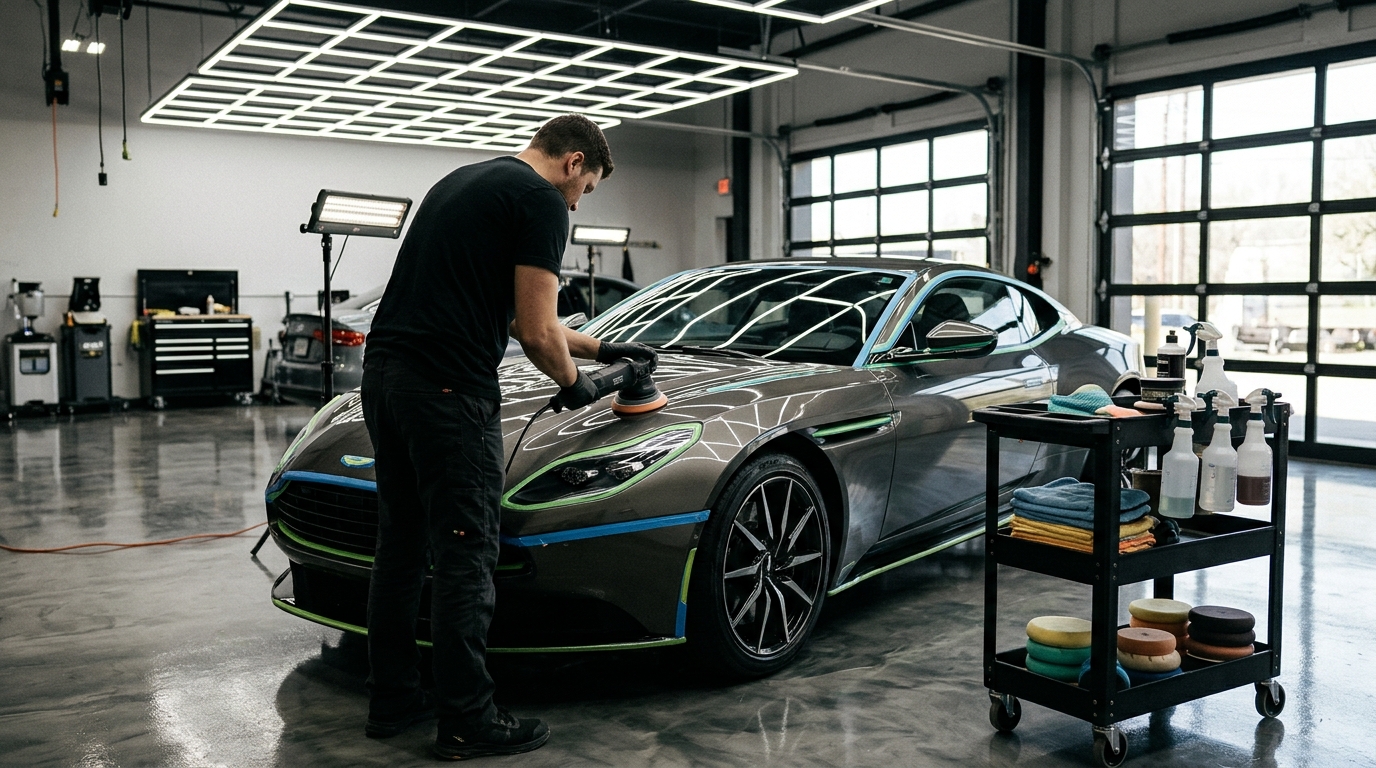
Ceramic coating is a liquid polymer applied to a vehicle's exterior that bonds with the factory paint to create a protective layer. This bond is permanent and requires a flawless surface to adhere correctly. If the paint is dirty, contaminated, or damaged, the coating will lock those imperfections in place for years. Professional detailers follow a strict protocol to ensure the paint is perfectly prepared before the coating is applied. This process is known as paint correction and decontamination.
1. Thorough Hand Wash and Pre-Wash
Removing loose dirt prevents scratches during the polishing process. The first step is always a gentle but thorough wash. Detailers use a two-bucket method with grit guards to ensure no loose particles remain on the paint. A pre-wash foam or snow foam is often applied to loosen road tar and bug splatter before any contact is made with the paint. This initial step is critical because rubbing loose dirt across the clear coat during polishing will cause deep scratches.
2. Iron and Tar Decontamination
Chemical decontamination removes embedded contaminants that washing cannot reach. After the wash, the vehicle is treated with an iron remover and a tar remover. These products chemically dissolve brake dust, rail dust, and tree sap that are embedded in the clear coat. You will often see the iron remover turn purple or pink as it reacts with the metal particles. This step ensures that the surface is chemically clean, not just visually clean.
3. Clay Bar or Synthetic Clay Treatment
Physical decontamination smooths the surface by removing bonded contaminants. Once the chemical treatment is complete, the car is clayed. A clay bar or synthetic clay mitt is used to physically pull out any remaining contaminants that are bonded to the paint. This process makes the paint feel glass-smooth to the touch. If the paint feels rough or has a texture like sandpaper, the clay bar is necessary to remove that grit before polishing.
4. Paint Inspection Under High-Intensity Lighting
Identifying defects requires proper lighting to see what the naked eye misses. Professional detailers inspect the paint under high-intensity LED lights or a paint inspection lamp. This lighting reveals swirl marks, fine scratches, and oxidation that are invisible under normal sunlight. The detailer maps out the defects to determine the level of correction needed. This assessment dictates the number of polishing passes required to restore the paint's clarity.
5. Machine Polishing for Paint Correction
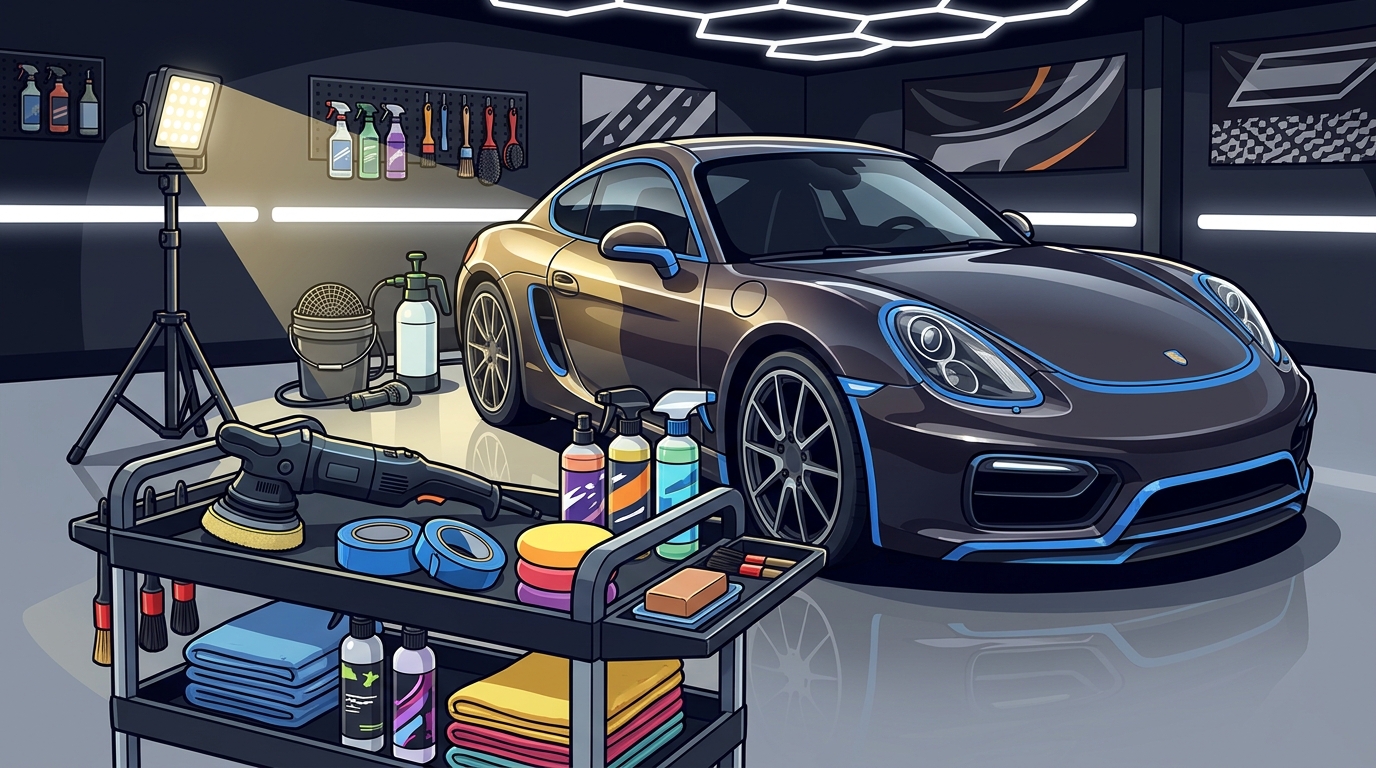
Polishing removes the top layer of clear coat to eliminate defects. Using a dual-action or rotary polisher with specific cutting compounds, the detailer removes swirl marks and scratches. This process is known as paint correction. It is not a cleaning step but a subtractive process that removes a microscopic layer of clear coat. The goal is to restore the paint to its original depth and gloss before the coating is applied.
6. Final Panel Wipe and Degreasing
Removing polishing oils ensures the coating bonds directly to the paint. After polishing, the paint is covered in oils and residues from the compound. A panel wipe or isopropyl alcohol solution is used to degrease the entire surface. This step is non-negotiable. If any oils remain, the ceramic coating will not bond properly and may peel or fail prematurely. The paint must be completely bare and clean for the chemical bond to form.
7. Application of the Ceramic Coating
The coating is applied in thin, even layers to ensure maximum durability. Once the paint is perfectly prepared, the ceramic coating is applied. Detailers work in small sections, usually 2x2 feet, to ensure even coverage. The coating is then leveled off with a microfiber towel. This final step requires precision and patience to avoid high spots or uneven thickness. The result is a hydrophobic, high-gloss finish that protects the paint for years.
Choosing a provider who follows these seven steps is the best way to ensure your investment in ceramic coating lasts. At Ceramic Pro San Rafael, our certified technicians adhere to these professional standards to deliver a flawless finish. We take the time to correct and prepare your paint properly, ensuring the coating bonds perfectly. To schedule your appointment, contact our team.
Frequently Asked Questions
How long does the preparation process take?
The preparation process typically takes one to two days, depending on the condition of the paint. A car with heavy swirl marks may require more time for polishing. The actual coating application usually takes a few hours. We recommend allowing at least 24 to 48 hours for the entire process to ensure the best results.
Can I apply ceramic coating over existing wax?
No, ceramic coating will not bond to wax or sealants. The surface must be completely stripped of any previous products. This is why the degreasing step is so important. If wax is present, the coating will fail to adhere and may peel off within weeks. Professional detailers always remove all previous products before applying a new coating.
Does ceramic coating hide scratches?
Ceramic coating does not hide or fill in scratches. It bonds to the surface as it is. If you have deep scratches, they will remain visible under the coating. This is why paint correction is a critical step. We polish out minor swirls and scratches before applying the coating to ensure a smooth, flawless finish.
How often should I wash my car after coating?
You should wash your car every two weeks to maintain the coating's performance. The hydrophobic properties of the coating make washing easier, as water and dirt slide off more easily. Use a pH-neutral car shampoo and avoid automatic car washes with harsh brushes. Regular maintenance helps extend the life of the coating and keeps the car looking its best.
Is ceramic coating worth the cost?
For most vehicle owners, ceramic coating is a worthwhile investment. It provides long-term protection against UV rays, chemical etching, and minor scratches. The coating also makes the car easier to clean and maintains its gloss for years. While the upfront cost is higher than wax, the longevity and protection level make it a cost-effective choice in the long run.