
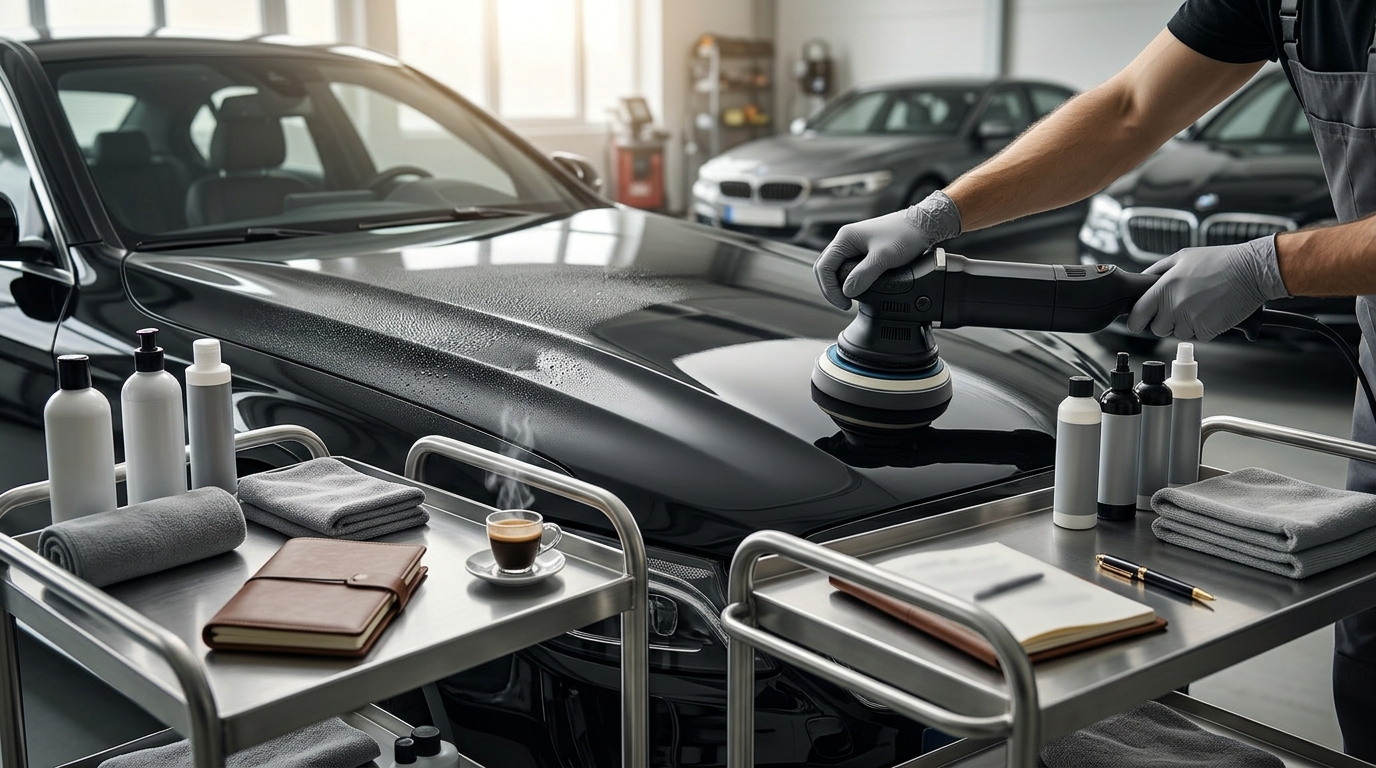
Professional detailing standards before ceramic coating application require a rigorous multi-stage process to ensure the paint is perfectly smooth and chemically clean. This preparation involves decontamination, machine polishing, and final sanitization to create a flawless bonding surface. At Marin Auto Detailing, we adhere to these strict protocols to guarantee that your investment in long-term protection yields the highest possible gloss and durability.
Why Preparation Matters
Ceramic coating is a liquid polymer that chemically bonds to your vehicle's clear coat. If the surface beneath the coating is dirty, rough, or contaminated, the coating will lock in those imperfections permanently. This is why professional detailing standards focus heavily on the pre-application phase. A coating applied to a flawed surface will not correct the paint; it will simply seal the defects under a hard, durable layer.
At Ceramic Pro San Rafael, we treat preparation as the most critical step in the entire process. The goal is to achieve a surface that is not only clean but also optically perfect. This ensures that the final result is a deep, mirror-like finish that enhances the vehicle's aesthetic appeal. Skipping or rushing this phase is a common mistake that leads to premature coating failure and a lackluster appearance.
The Decontamination Process
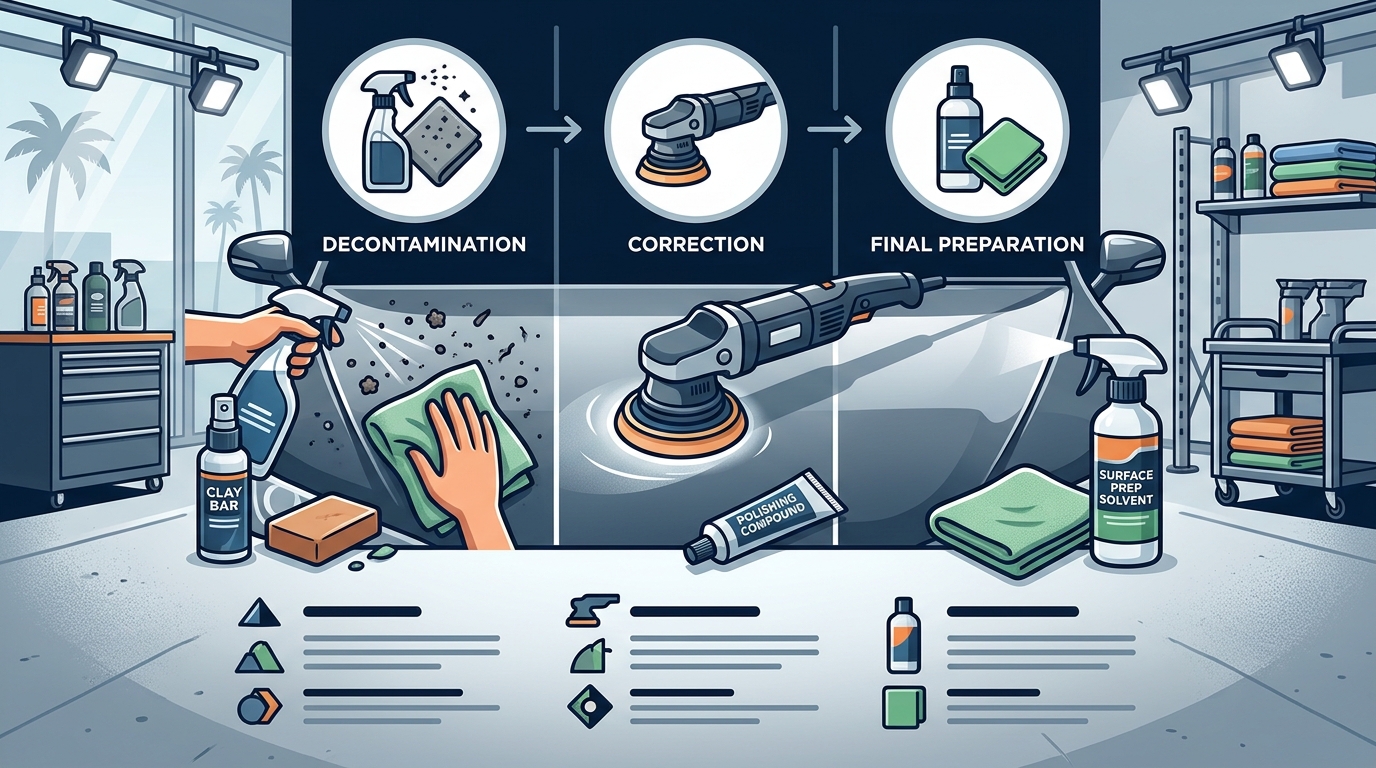
The first step is typically a clay bar treatment or the use of synthetic clay towels. This physical process lifts embedded particles from the paint surface. Following this, we apply iron fallout remover and tar remover to dissolve chemical contaminants. For example, iron particles from brake dust can etch into the clear coat if left untreated. By thoroughly decontaminating the vehicle, we ensure that the paint is smooth to the touch and ready for the next stage of preparation.
Paint Correction and Polishing
Paint correction is the mechanical process of removing defects such as swirl marks, light scratches, and oxidation. This is achieved through machine polishing using specific compounds and pads. The depth of correction depends on the condition of the paint and the desired outcome. A single-stage polish might be sufficient for minor swirls, while a two-stage process is required for deeper defects.
At Marin Auto Detailing, our technicians assess the paint condition before determining the correction strategy. We use precision tools to remove only the necessary amount of clear coat, preserving the integrity of the paint while maximizing gloss. This step is crucial because ceramic coating is not a filler; it cannot hide deep scratches. By correcting the paint first, we ensure that the coating bonds to a flawless surface, resulting in a high-gloss finish that lasts for years.
Final Sanitization and Bonding
After polishing, the paint surface is left with residual oils and polishing compounds. These residues must be completely removed before the ceramic coating is applied. This step is known as final sanitization or panel wiping. It involves using a dedicated prep solvent to strip away any remaining contaminants. This ensures that the ceramic coating bonds directly to the clear coat without any interference.
Professional standards dictate that the surface must be completely dry and free of any visible residue before application. We use high-quality prep solvents that evaporate quickly and leave no film behind. This meticulous attention to detail is what separates a professional application from a DIY attempt. By ensuring a chemically clean surface, we maximize the durability and hydrophobic properties of the coating. This step is non-negotiable for achieving a long-lasting, high-performance finish.
Identifying Quality Work
When evaluating a detailing service, it is important to look for specific indicators of quality in their preparation process. A reputable provider will be transparent about their steps and willing to explain the rationale behind each one. They should use professional-grade products and tools, not generic consumer items. Additionally, they should perform a final inspection under high-intensity lighting to ensure no defects remain.
At Ceramic Pro San Rafael, we take pride in our transparency and attention to detail. We document the condition of your vehicle before and after each step, allowing you to see the progress. This level of care ensures that you receive a service that meets the highest industry standards. By choosing a provider that prioritizes preparation, you can be confident that your ceramic coating will perform as expected and protect your investment for years to come.
Key Takeaways
- Ceramic coating bonds chemically to the clear coat, making surface preparation critical for long-term performance.
- Decontamination removes embedded contaminants like iron fallout and tar that a standard wash cannot eliminate.
- Paint correction through machine polishing removes swirl marks and scratches, ensuring a flawless bonding surface.
- Final sanitization with a prep solvent removes polishing residues, allowing the coating to bond directly to the paint.
- Professional providers use high-intensity lighting and precision tools to inspect and correct paint defects.
- Skipping or rushing the preparation phase can result in a dull finish and premature coating failure.
Frequently Asked Questions
How long does the preparation process take?
The preparation process typically takes one to two days, depending on the condition of the paint. This includes decontamination, polishing, and final sanitization. The exact duration varies based on the level of correction required.
Can I wash my car after the coating is applied?
Yes, but you should wait at least 14 days before washing the car. This allows the coating to fully cure and bond to the paint. Use pH-neutral soap and avoid automatic car washes with harsh brushes.
Does ceramic coating remove existing scratches?
No, ceramic coating does not remove scratches. It is a protective layer that bonds to the surface. Any scratches present before application will remain visible under the coating. Paint correction is required to remove scratches.
What is the difference between decontamination and polishing?
Decontamination removes embedded contaminants from the paint surface, while polishing removes defects like swirl marks and scratches. Both steps are essential for preparing the paint for ceramic coating.
How often should I maintain my ceramic coating?
Regular maintenance is recommended to keep the coating performing at its best. This includes washing the car every two weeks and applying a ceramic coating booster every three to six months.
Can I apply ceramic coating over existing wax?
No, ceramic coating should not be applied over existing wax or sealants. These products create a barrier that prevents the coating from bonding to the paint. The surface must be completely clean and free of any residues.