
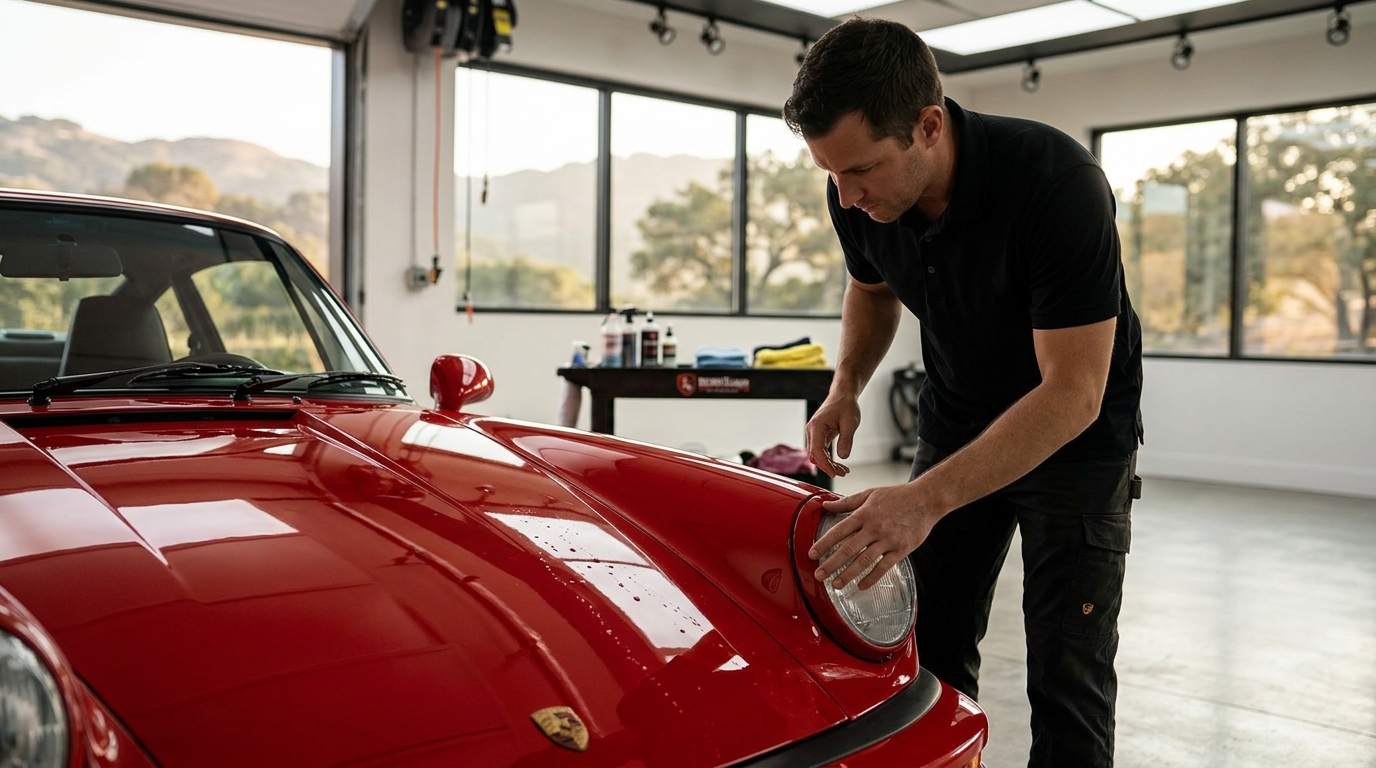
Ceramic coatings resist harsh chemicals and environmental damage because they form a dense, cross-linked silica network that bonds chemically to the vehicle's clear coat. This inorganic layer creates a hydrophobic and chemically inert barrier that prevents acidic contaminants, UV radiation, and oxidation from penetrating the paint. At Ceramic Pro San Rafael, we apply these advanced coatings to ensure your vehicle maintains its gloss and integrity against the daily wear of Marin County driving conditions.
The Molecular Structure of Inorganic Protection
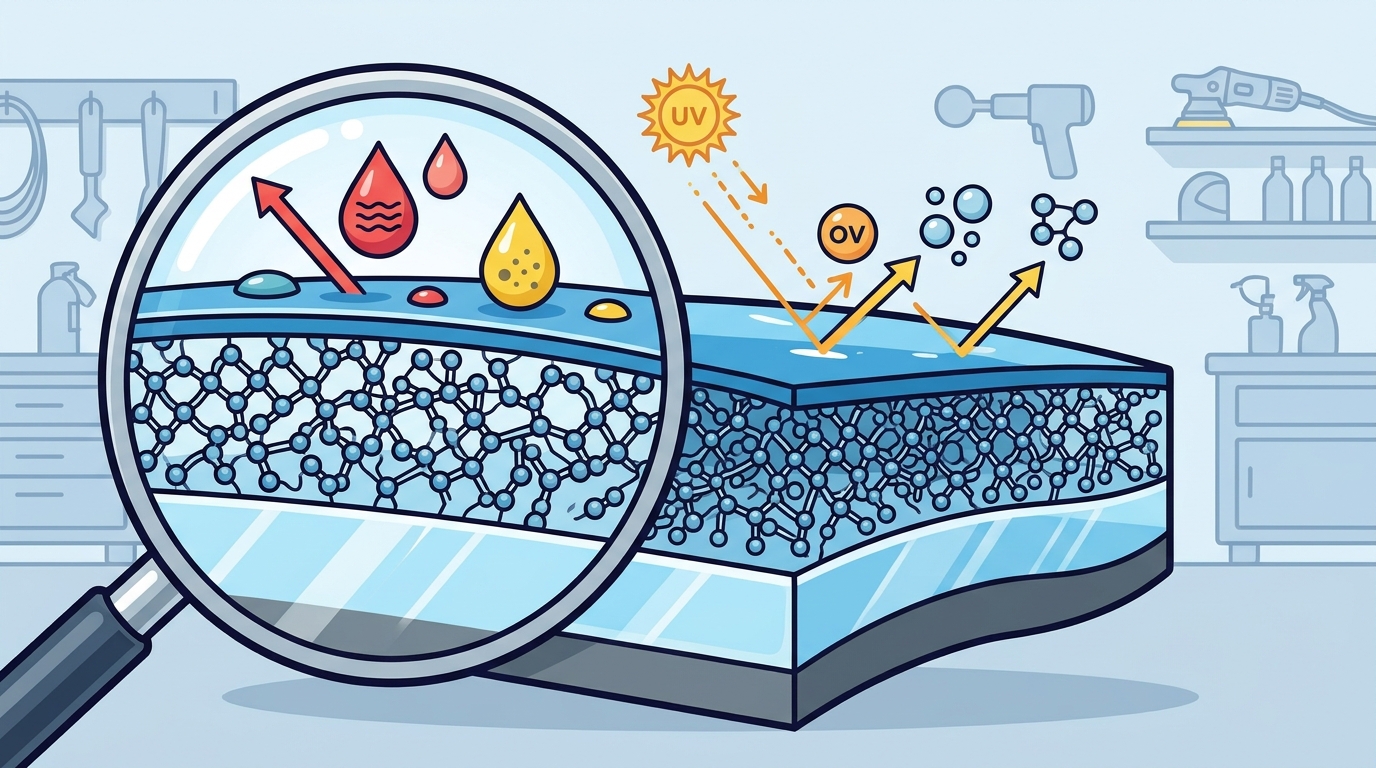
Traditional waxes and sealants are organic compounds that degrade quickly when exposed to heat and chemicals. Ceramic coating is a liquid polymer that cures into a hard, inorganic silica dioxide layer. This fundamental difference in chemistry is why ceramic coatings offer superior longevity and resistance. The silica molecules bond at a molecular level with the factory clear coat, creating a surface that is significantly harder and more stable than organic alternatives.
Why Inorganic Matters
Organic materials break down under UV exposure and chemical attack. Inorganic silica, however, is highly stable. It does not oxidize or evaporate. This stability allows the coating to maintain its protective properties for years rather than months. The dense structure of the cured coating leaves very few pores for contaminants to penetrate.
Chemical Inertness and Acid Resistance
One of the primary threats to vehicle paint is acidic contaminants, such as bird droppings, bug splatter, and tree sap. These substances can etch into the clear coat if left unattended. Ceramic coatings provide a chemically inert surface that resists these acidic attacks. The coating acts as a sacrificial barrier, protecting the underlying paint from permanent etching and discoloration.
Handling Harsh Substances
While no coating is immune to all chemicals, high-quality ceramic coatings resist common automotive contaminants effectively. The hydrophobic nature of the coating causes water and dissolved contaminants to bead up and roll off. This self-cleaning property reduces the contact time between the paint and harmful substances. At Ceramic Pro San Rafael, we emphasize this chemical resistance as a key benefit for owners who park outdoors or drive on busy roads.
UV Protection and Oxidation Prevention
Ultraviolet (UV) radiation is a primary driver of paint oxidation and fading. Over time, UV rays break down the chemical bonds in the clear coat, causing it to turn chalky and lose gloss. Ceramic coatings contain UV stabilizers that absorb and dissipate this harmful energy. This protection prevents the clear coat from degrading, keeping the paint vibrant and deep for the life of the vehicle.
Long-Term Color Retention
By blocking UV damage, ceramic coatings help preserve the original color and depth of the paint. This is particularly important for dark colors, which show oxidation more visibly. The coating also resists corrosion from environmental pollutants. This comprehensive protection ensures that the vehicle's finish remains consistent and attractive over many years of use.
Hydrophobic Properties and Self-Cleaning
Hydrophobicity is the tendency of a surface to repel water. Ceramic coatings are highly hydrophobic, causing water to form tight beads that roll off the surface. This property is crucial for chemical resistance because it minimizes the time contaminants stay in contact with the paint. As water rolls off, it carries away dirt, dust, and dissolved chemicals, effectively cleaning the surface.
Reducing Contaminant Adhesion
The smooth, low-energy surface of a ceramic coating makes it difficult for contaminants to adhere. This reduces the buildup of grime and chemical residues. The self-cleaning effect means that regular washing is easier and less frequent. This not only saves time but also reduces the risk of swirl marks and scratches during the cleaning process.
Maintenance and Longevity of the Barrier
While ceramic coatings are highly resistant, they still require proper maintenance to retain their performance. Using pH-neutral car shampoos and avoiding harsh abrasive cleaners helps preserve the coating's integrity. Regular inspections and professional maintenance can extend the life of the coating. At Marin Auto Detailing, we recommend periodic maintenance services to ensure the coating continues to perform at its peak.
Professional Application Matters
The quality of the application directly impacts the coating's chemical resistance. Proper surface preparation, including decontamination and paint correction, is essential for optimal bonding. A poorly applied coating may not bond correctly, leading to premature failure. Professional installers ensure that the coating is applied evenly and cures properly, maximizing its protective capabilities.
Key Takeaways
- Ceramic coatings are inorganic silica layers that bond chemically to the clear coat, offering superior stability compared to organic waxes.
- The dense molecular structure of the coating resists acidic contaminants like bird droppings and bug splatter.
- UV stabilizers in ceramic coatings prevent oxidation and fading, preserving the paint's color and gloss.
- High hydrophobicity creates a self-cleaning effect that reduces contaminant contact time and adhesion.
- Proper application and pH-neutral maintenance are critical to maintaining the coating's chemical resistance over time.
- Professional installation ensures optimal bonding and long-term performance of the protective layer.
Frequently Asked Questions
How long does a ceramic coating last?
High-quality ceramic coatings typically last between 2 to 7 years, depending on the product and maintenance. Some premium systems offer lifetime warranties. Regular care and professional maintenance can extend the lifespan significantly.
Can ceramic coatings be damaged by car wash chemicals?
Most professional ceramic coatings are resistant to standard car wash chemicals. However, using harsh, non-pH-neutral cleaners or abrasive tools can degrade the coating over time. It is best to use gentle, pH-neutral products for washing.
Does ceramic coating protect against all chemicals?
No, no coating is immune to all chemicals. Strong solvents or industrial chemicals can damage ceramic coatings. However, they offer excellent resistance to common automotive contaminants like acids, salts, and UV radiation.
How does ceramic coating compare to wax?
Ceramic coatings are inorganic and last for years, while waxes are organic and last for months. Ceramic coatings offer superior chemical resistance, UV protection, and hydrophobic properties compared to traditional waxes.
Do I still need to wash my car if it has a ceramic coating?
Yes, you still need to wash your car. The coating makes washing easier and reduces contaminant adhesion, but it does not eliminate the need for regular cleaning. Proper washing helps maintain the coating's performance and appearance.
Conclusion
Ceramic coatings offer exceptional resistance to harsh chemicals and environmental damage due to their inorganic silica structure, chemical inertness, and hydrophobic properties. These features protect the vehicle's paint from oxidation, acidic contaminants, and UV degradation. For vehicle owners in San Rafael and Marin County, investing in a professional ceramic coating is a smart way to preserve the vehicle's appearance and value. To discuss your specific protection needs, contact Ceramic Pro San Rafael Elite today.