
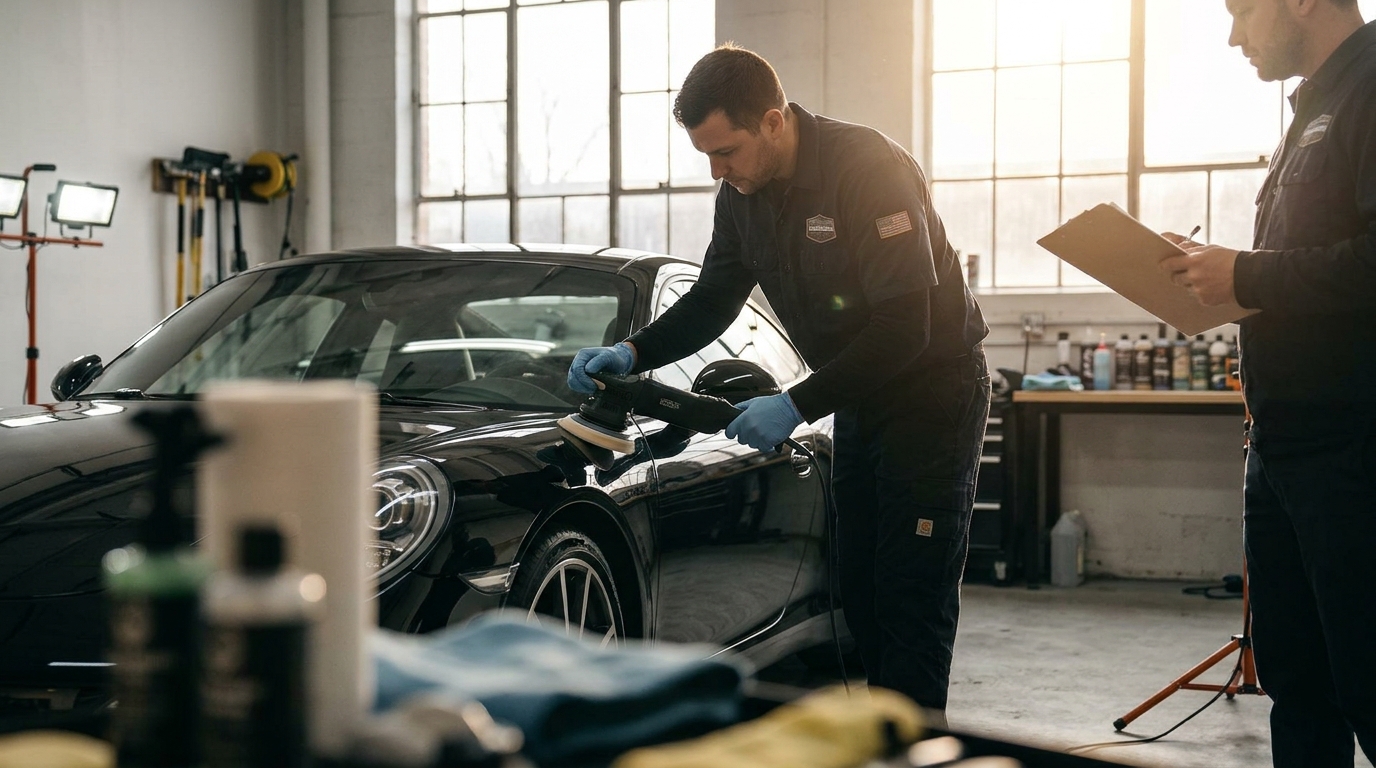
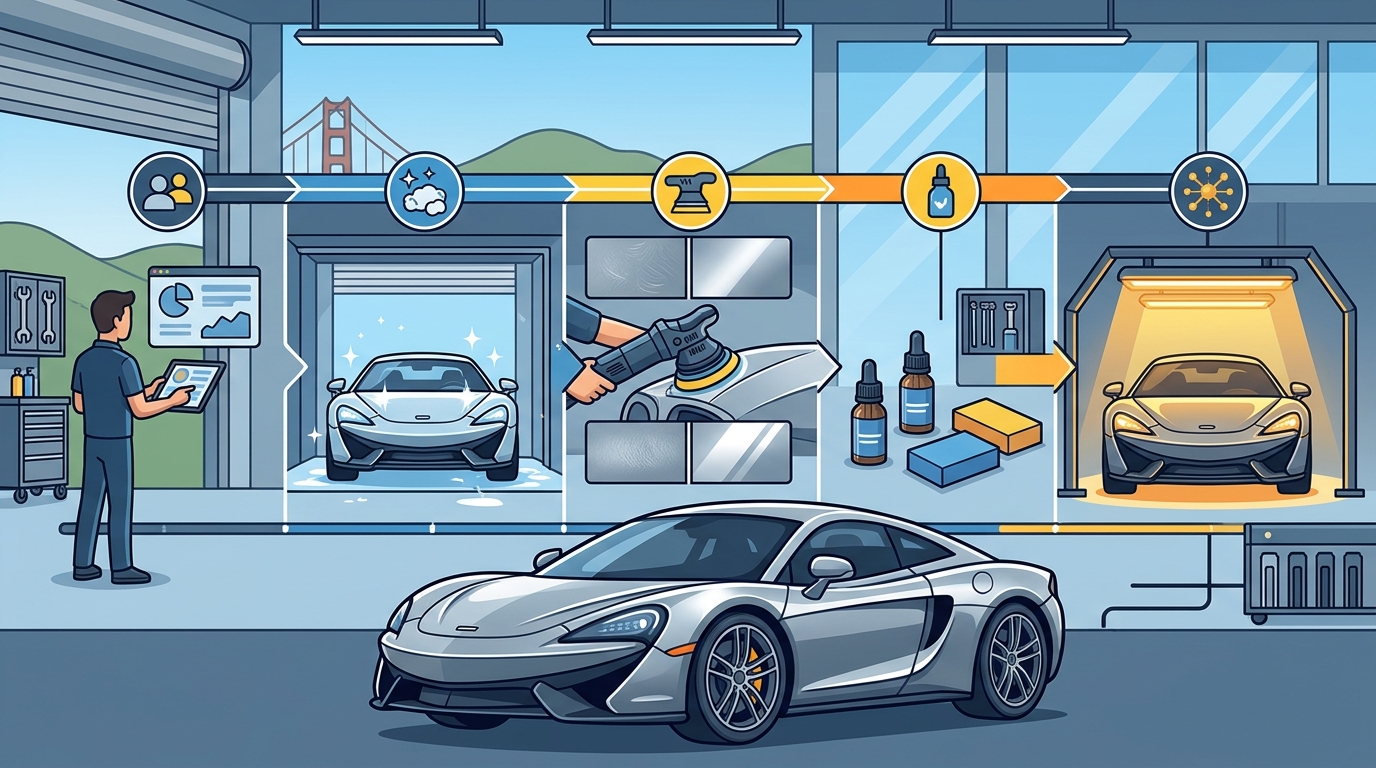
Applying a ceramic coating is a multi-stage process that typically takes two to three days. The timeline begins with a detailed consultation and moves through rigorous paint correction, surface decontamination, and the precise application of the ceramic layer. Finally, the vehicle enters a mandatory curing period where the coating bonds chemically to the paint. At Ceramic Pro San Rafael, this structured approach ensures a durable, high-gloss finish that protects your vehicle for years.
The Initial Consultation and Assessment
The process starts with a face-to-face consultation where the technician evaluates the current condition of your vehicle. This step is critical because the existing state of the paint dictates the amount of correction work required. A certified technician will inspect the clear coat for swirl marks, oxidation, and deep scratches. This assessment allows the studio to recommend the most appropriate package for your specific needs.
During this phase, the technician also discusses your expectations regarding gloss and protection. They will explain the differences between various coating systems, such as the ION coating system or standard ceramic layers. This ensures there are no surprises regarding the final outcome. Clear communication at this stage sets the foundation for a successful installation.
Paint Correction and Surface Preparation
Before any coating is applied, the vehicle must undergo a thorough cleaning and correction process. This is the most labor-intensive part of the timeline and often takes the longest. The process begins with a hand wash and pressure clean to remove loose dirt and debris. Next, a clay bar treatment is performed to extract embedded contaminants that regular washing cannot remove.
Once the surface is clean, the technician moves to paint correction. This involves using specialized polishing compounds to level the clear coat and remove imperfections. The goal is to create a perfectly smooth surface for the coating to bond to. If the paint has deep scratches, this stage may require multiple passes with different grits of polish. The result is a mirror-like finish that maximizes the visual impact of the coating.
The Ceramic Coating Application
With the paint corrected and the surface perfectly clean, the technician begins the application of the ceramic coating. This step requires a controlled environment to prevent dust and debris from interfering with the bond. The coating is applied in thin, even layers using a specialized applicator. Each layer must be flashed for a specific amount of time before being wiped off with a clean microfiber towel.
The number of layers applied depends on the specific package chosen. For example, a premium package might include a base layer and a top coat for enhanced durability. The technician must work with precision to ensure full coverage without leaving streaks or high spots. This stage is where the chemistry of the coating begins to interact with the paint, creating a permanent protective barrier.
Curing and Final Inspection
After the final layer is applied, the vehicle enters the curing phase. Curing is the process where the coating hardens and bonds chemically to the paint. This stage typically takes 24 to 48 hours, during which the vehicle must remain dry and protected from the elements. The technician will inspect the vehicle for any imperfections and perform a final quality check. Once the coating is fully cured, the vehicle is ready for release.
During the curing period, the hydrophobic properties of the coating begin to develop. Water will start to bead up and roll off the surface more effectively. The technician will provide specific aftercare instructions to ensure the longevity of the coating. This final step is crucial for maintaining the performance and appearance of the new finish.
Post-Installation Care and Maintenance
Once the vehicle is released, the owner must follow specific maintenance guidelines to protect the investment. The first two weeks are critical, as the coating continues to strengthen. During this period, the vehicle should not be washed or exposed to harsh chemicals. After the initial two weeks, regular washing with pH-neutral soap is recommended to maintain the hydrophobic properties.
Proper maintenance extends the life of the coating and keeps the vehicle looking its best. The technician at Marin Auto Detailing will provide a detailed care plan tailored to your specific coating. This includes guidance on how to handle bird droppings, tree sap, and other contaminants. Following these instructions ensures that the protection lasts for the duration of the warranty.
Key Takeaways
- The entire process typically takes two to three days, depending on the condition of the paint.
- Paint correction is the most time-consuming step and is essential for a flawless finish.
- The curing phase requires 24 to 48 hours of dry time to ensure a strong chemical bond.
- Proper aftercare is critical to maintaining the hydrophobic properties and longevity of the coating.
- A certified technician will provide a detailed care plan to help you protect your investment.
Frequently Asked Questions
How long does the entire ceramic coating process take?
The process usually takes two to three days. This includes the initial consultation, paint correction, coating application, and the mandatory curing period.
Can I drive my car immediately after the coating is applied?
No, the vehicle must remain dry for 24 to 48 hours during the curing phase. You should avoid washing or exposing the car to rain during this time.
What is paint correction and why is it necessary?
Paint correction is the process of polishing the clear coat to remove swirl marks and scratches. It is necessary because the coating bonds to the surface, and any imperfections will be locked in.
How long does the coating last?
The longevity depends on the specific package and maintenance. Most professional ceramic coatings last between two and seven years, with some premium options offering lifetime warranties.
Do I need to wash my car differently after coating?
Yes, you should use pH-neutral soap and avoid automatic car washes with harsh brushes. Regular hand washing is recommended to maintain the hydrophobic properties.
What happens if I wash my car too soon?
Washing the car before the coating is fully cured can compromise the bond and reduce the effectiveness of the protection. It is best to wait at least two weeks before the first wash.