
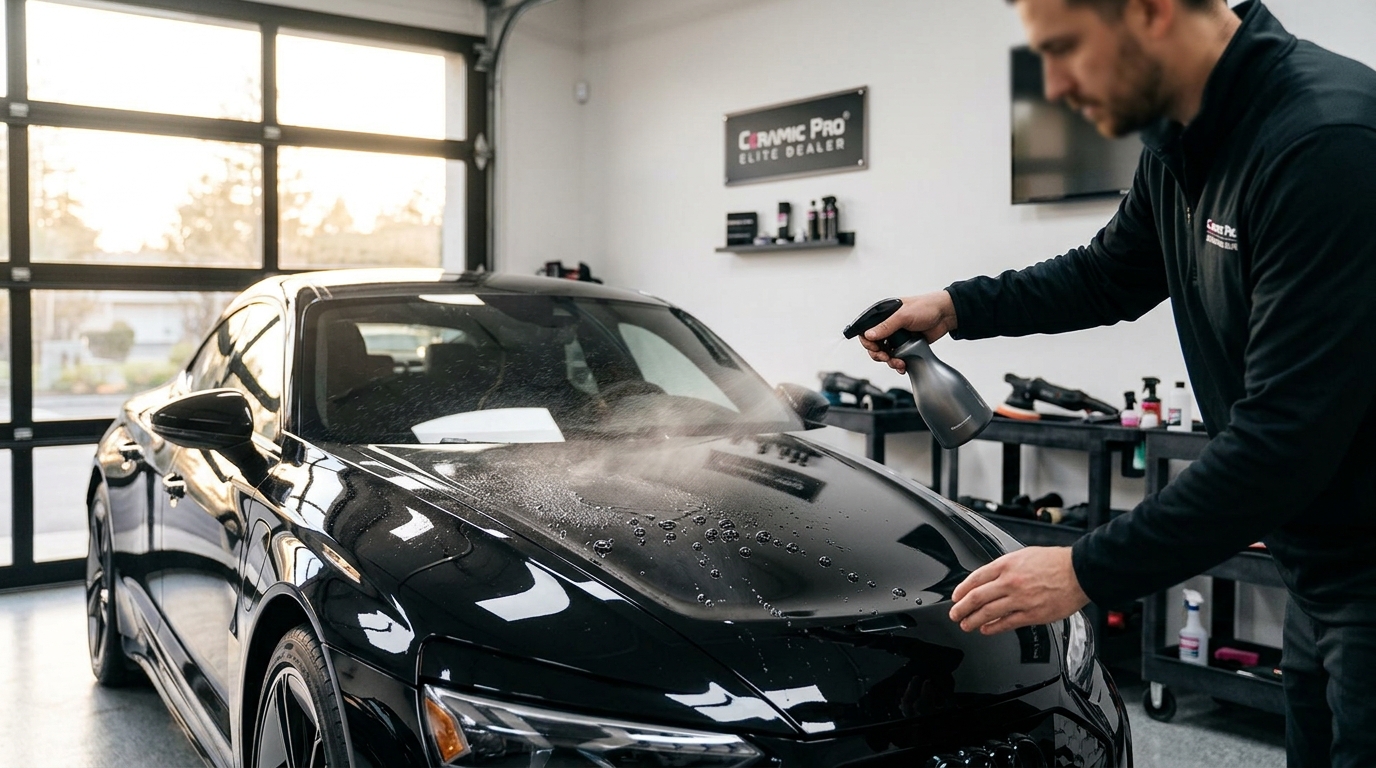
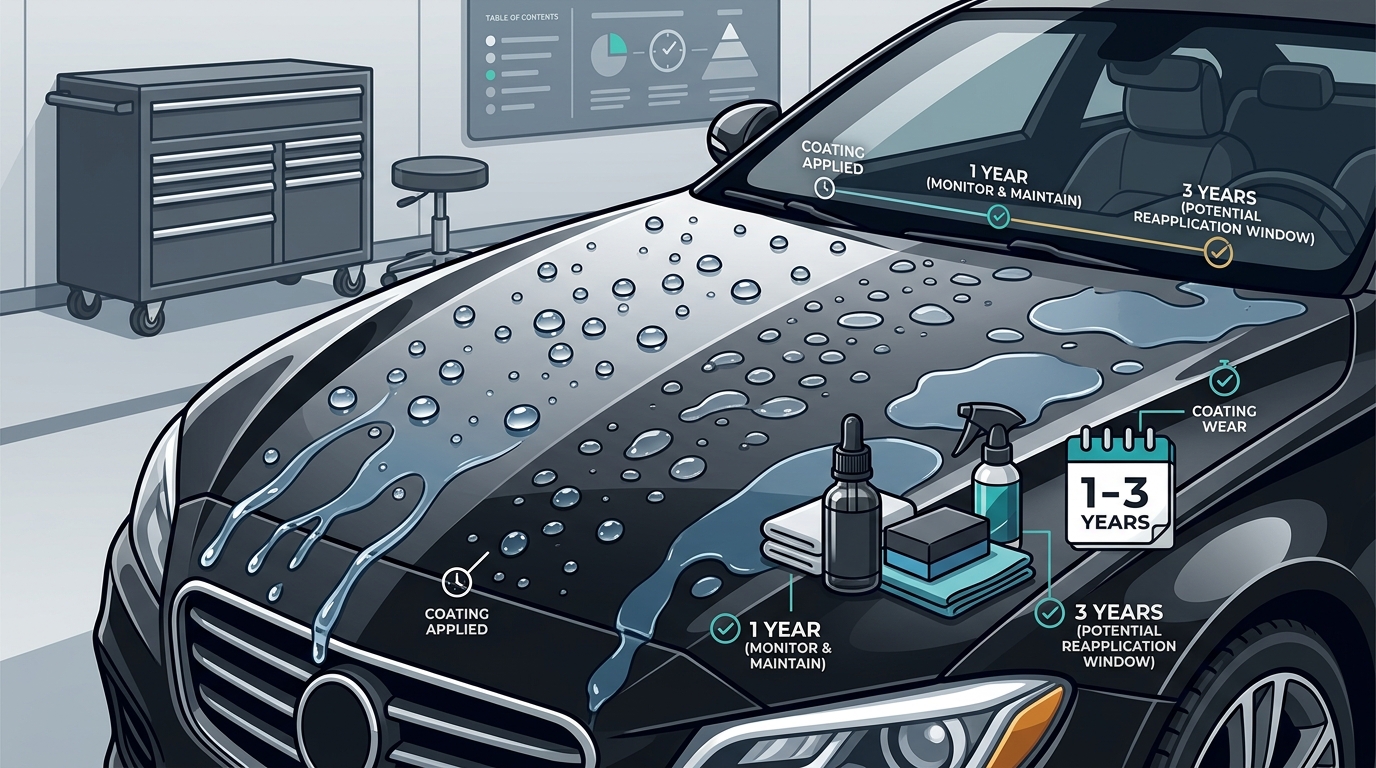
Ceramic Pro San Rafael Elite advises that vehicle owners reapply ceramic coating every 1 to 3 years to maintain optimal hydrophobic performance. This guide covers the science of coating degradation, the role of maintenance spray boosters, and specific timelines for different coating tiers. We provide a comprehensive framework for monitoring your vehicle's finish and extending the life of your investment through proper care and professional intervention.
Understanding Hydrophobic Performance
Hydrophobic performance is the ability of a surface to repel water, causing droplets to bead up and roll off rather than spread out. In the context of automotive ceramic coatings, this property is driven by the chemical structure of the silica-based layer bonded to the paint. When a coating is fresh, water contact angles are high, typically exceeding 110 degrees, which ensures rapid water shedding. For additional details, review the Contact Us Ceramic Pro.
As the coating ages, the surface energy changes, and the hydrophobic effect diminishes. Water may begin to sheet across the paint instead of beading. This is not necessarily a sign of total failure, but it indicates that the top layer of the coating has worn down. At Ceramic Pro San Rafael, we emphasize that hydrophobicity is a dynamic metric that requires regular monitoring to ensure your vehicle remains protected against contaminants.
Factors Affecting Coating Lifespan
The longevity of a ceramic coating is not a fixed number; it is a variable influenced by environmental and behavioral factors. Understanding these variables helps owners predict when reapplication is necessary.
Environmental Exposure
Ultraviolet (UV) radiation is the primary enemy of ceramic coatings. While the coating itself protects the paint from UV damage, the coating material degrades under prolonged sun exposure. In the Bay Area, where vehicles often face intense summer sun and coastal salt air, this degradation can occur faster than in milder climates. Salt residue from coastal driving can also etch into the coating if not washed off promptly.
Washing Habits
How you wash your car significantly impacts coating life. Using harsh chemicals, automatic car washes with abrasive brushes, or improper drying techniques can strip the coating prematurely. A two-bucket hand wash method with pH-neutral shampoo is the gold standard for preserving hydrophobic performance. At Marin Auto Detailing, we recommend regular, gentle washing to remove contaminants before they bond to the surface.
Coating Thickness and Quality
Not all ceramic coatings are created equal. The number of layers applied and the quality of the product determine the baseline lifespan. A single layer of a standard coating may last one to two years, while a multi-layer professional application can last five to seven years or more. The thickness of the coating acts as a buffer; as the top layers wear away, the underlying layers continue to provide protection.
Maintenance Spray Boosters
Maintenance spray boosters are liquid ceramic products designed to replenish the hydrophobic properties of an existing coating without requiring a full reapplication. These products are typically silica-based and bond to the top layer of the ceramic coating, effectively