
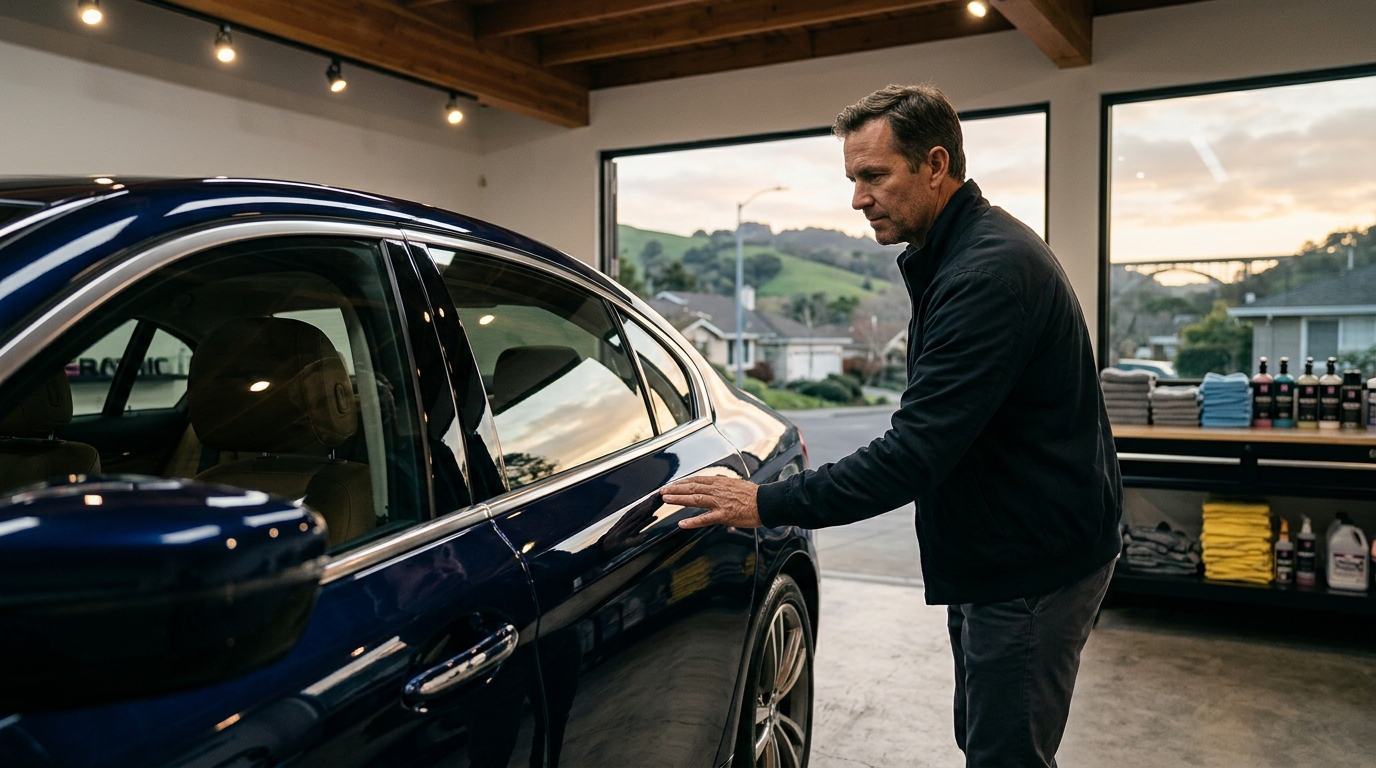
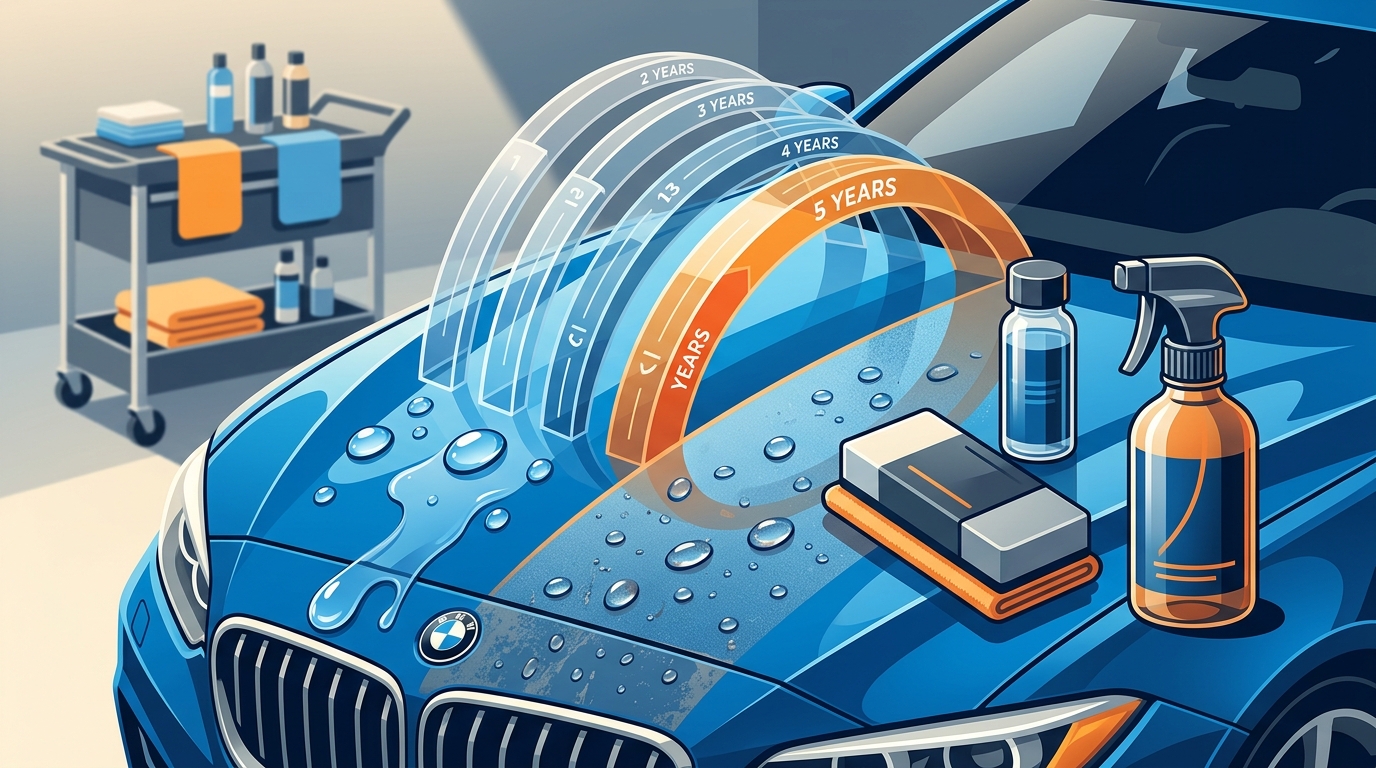
Vehicle owners should reapply ceramic coating every 2 to 5 years to maintain optimal hydrophobic performance. This timeline depends on the specific product tier, environmental exposure, and maintenance habits. This guide details how to monitor coating degradation and the role of maintenance spray boosters in extending the lifespan of your vehicle's protective layer. For additional details, review the Contact Us Ceramic Pro.
Understanding Hydrophobicity and Coating Lifespan
Ceramic coating is a liquid polymer applied to a vehicle's exterior that cures to form a hard, protective layer. This layer bonds chemically with the factory paint, creating a surface that repels water, dirt, and contaminants. The primary function of this bond is to maintain hydrophobicity, which is the property of a surface that causes water to bead up and roll off rather than spread out. When a coating is fresh, water beads are tight, spherical, and roll off quickly, taking dirt with them. For additional details, review the Window Tint Release Form.
As time passes, the coating undergoes a process called hydrophobic degradation. This does not mean the coating disappears immediately. Instead, the surface energy of the coating changes, causing water to sheet or lay flat instead of beading. This shift indicates that the protective layer is losing its effectiveness. At Ceramic Pro San Rafael, we emphasize that a coating is not a permanent solution but a long-term investment that requires monitoring. The lifespan of a professional-grade coating typically ranges from two to seven years, depending on the specific product line and application thickness.
Factors Affecting Coating Degradation
Several environmental and mechanical factors accelerate the breakdown of a ceramic coating. Understanding these variables helps owners predict when reapplication is necessary. The most significant factors include UV exposure, chemical contaminants, and physical abrasion.
UV Radiation and Oxidation
Ultraviolet (UV) rays from the sun break down the chemical bonds in the coating over time. While ceramic coatings offer superior UV protection compared to traditional waxes, they are not immune to degradation. In the Bay Area, where vehicles are exposed to intense sunlight for much of the year, UV exposure is a primary driver of coating aging. This exposure can cause the coating to become less hydrophobic and may lead to a duller appearance if the underlying paint is not properly protected.
Chemical Contaminants
Acid rain, bird droppings, tree sap, and industrial fallout are highly acidic or alkaline substances that can etch into the coating. If these contaminants are not removed promptly, they can penetrate the ceramic layer and damage the clear coat beneath. Regular washing is essential to neutralize these chemicals before they cause permanent damage to the coating's surface energy.
Physical Abrasion
Washing techniques play a critical role in coating longevity. Using harsh brushes, dirty mitts, or automatic car washes with aggressive brushes can scratch the coating. These micro-scratches disrupt the smooth surface required for hydrophobic performance. At Marin Auto Detailing, we recommend hand washing with pH-neutral soaps and high-quality microfiber towels to preserve the coating's integrity.
Maintenance Spray Boosters
Maintenance spray boosters are specialized products designed to replenish the hydrophobic properties of a ceramic coating without requiring a full reapplication. These sprays typically contain a thin layer of ceramic or synthetic polymers that bond to the existing coating. They act as a